
Shoppers have been conditioned by the likes of Amazon to expect seamless resolution when something goes wrong. But most merchants are still using shipping protection models built for a different era of commerce.
This article examines how expectations for shipping protection plans have evolved and what marks a protection plan for online stores. Most importantly, it gives you a starting point to evaluate whether your current approach is positioned to support growth or holding you back.
Why merchants need delivery coverage.
Shipping and delivery are a major source of anxiety for consumers. Over 100 million packages are stolen annually and 1 in 10 packages arrive damaged. What do consumers feel when that happens? Betrayed. 40% of consumers won't bother giving a brand a second chance.
Shipping protection plans for online stores are opt-in coverage options that protect customers against loss, theft, damage, or delays during shipping. Protections plans can also cover the entire post-purchase journey including returns and exchanges.
Given the current state of commerce, this just isn’t another box to check. With consumers being marketed to across more channels than ever before, the quality of your post-purchase protection experience isn't separated from your brand perception. It is your brand perception.
The real question isn't whether shipping issues will happen, but rather how you handle them when they do.
The compliance crisis most merchants don't see coming.
The biggest challenge facing shipping protection is legal. Multiple state insurance departments have issued warnings about "fake shipping insurance" from unlicensed providers.
The National Association of Insurance Commissioners found that many merchants unknowingly commit fraud by offering unlicensed shipping protection that masquerades as "warranties," "tech solutions," or "self-insurance" to circumvent state regulation. These merchants expose themselves to class-action litigation for partnering with illegal providers.
This isn't theoretical risk. The regulatory scrutiny has intensified significantly, and merchants partnering with non-compliant providers face potential lawsuits, fines, and reputational damage when customers discover their "protection" wasn't backed by legitimate insurance.
Faced with this compliance minefield, many merchants choose to self-insure. This means they eat the cost of lost or damaged shipments themselves. At low volumes, this seems manageable. But it creates hidden problems that become dealbreakers as you scale.
Without proper data visibility, you're flying blind and creating a growth ceiling. You can't identify patterns in carrier performance, high-risk product categories, or problematic shipping zones. Resolution is entirely reactive, and cash flow impact is unpredictable, spiking during peak seasons or when a batch of shipments goes missing.
What shipping coverage looks like across product categories.
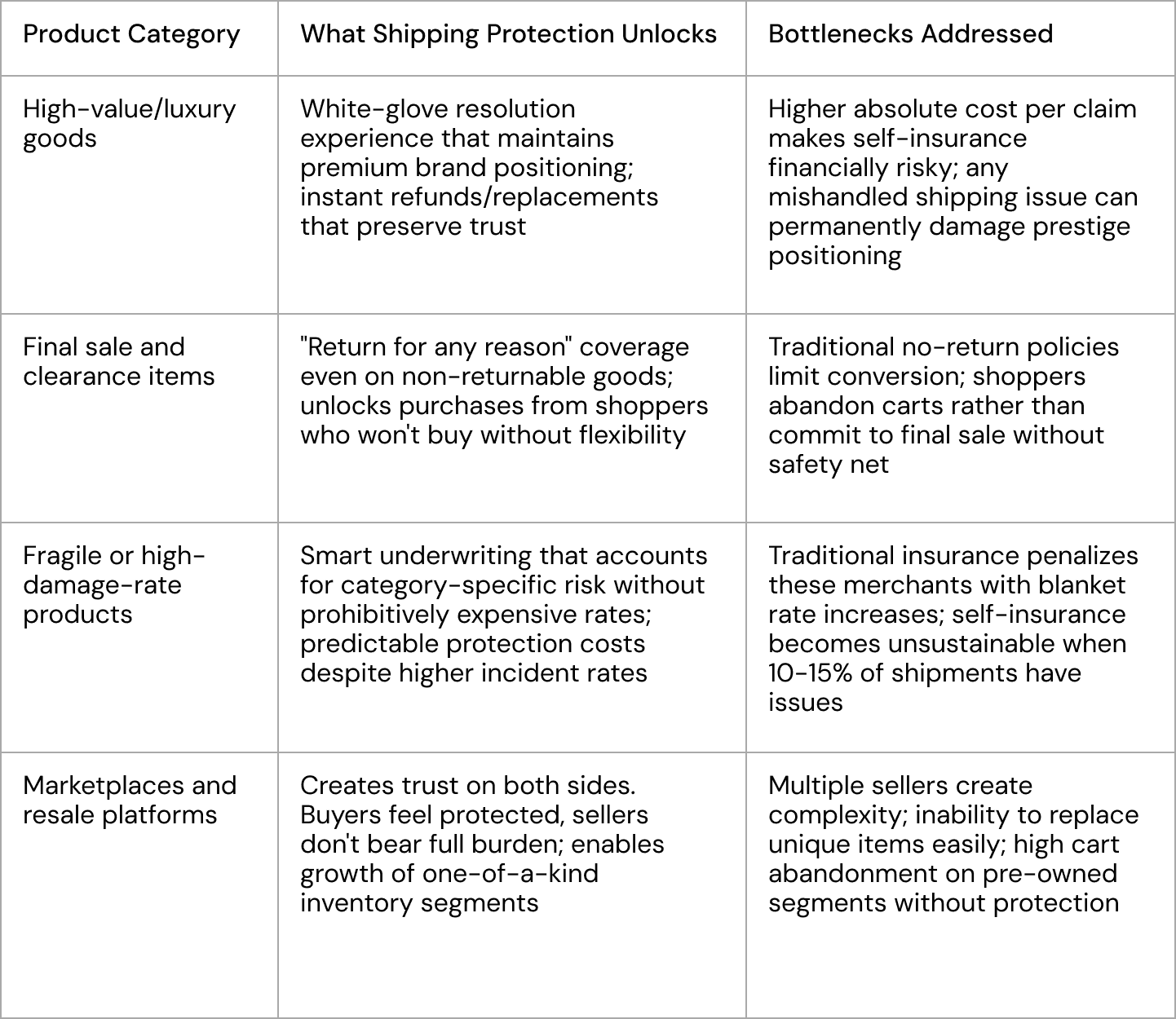
Not all merchants face the same shipping challenges, and effective protection plans adapt to different product categories, business models, and customer segments rather than forcing a one-size-fits-all approach. Different ecommerce categories create different pressures. Take these as an example.
How post-purchase has evolved beyond transit coverage.
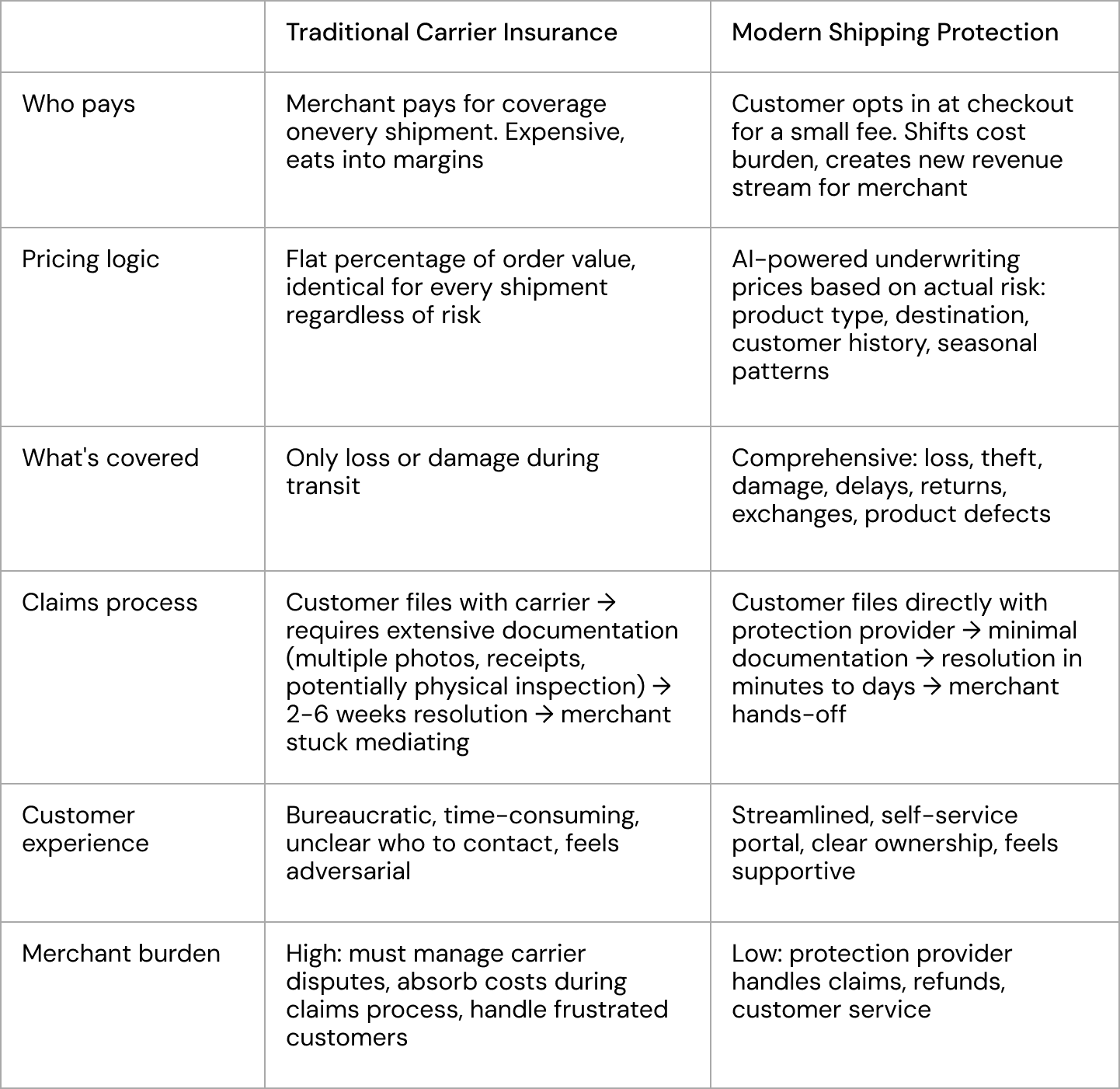
The shipping protection industry hasn't kept pace with how commerce has evolved. Customer expectations have fundamentally shifted: they expect instant resolution when something goes wrong, not lengthy claims processes.
93% of consumers consider the post-purchase experience just as important as the purchase experience itself. Modern shoppers don't distinguish between "shipping problems" and "merchant problems. “ They blame the brand regardless of who's at fault.
This reality has pushed merchants to rethink shipping protection entirely. It's no longer just about covering lost packages in transit, but a strategic play toward building a stellar, unified post-purchase experience.
Traditional shipping insurance covered one narrow scenario: lost or damaged packages in transit. Modern shipping protection plans cover loss, theft, damage, delays, returns, exchanges, buyer's remorse, and even product defects. Customers don't care about the technical distinction between "transit damage" and "wrong size,” they just want their problem solved.
Then vs now: How shipping protection evolved
What online stores should look for in shipping coverage
The value of a shipping protection plan isn't determined by whether it exists, but by whether it actually delivers on three critical outcomes: operational efficiency, financial performance, and customer experience.
1. Reduces support burden
What good looks like:
Self-service resolution portals where customers handle their own claims without contacting support
Automated claims processing that resolves most issues in under 24 hours
Single dashboard for monitoring all post-purchase issues across all channels
Integration with existing tech stack (Shopify, returns platforms, customer service tools)
2. Generates revenue
What good looks like:
Customer-funded model creates new revenue stream
Merchants earn revenue share on every protection plan sold
Instant revenue recognition
Increased average order value because customers feel confident buying more
3. Builds customer trust
What good looks like:
Presence of protection option at checkout reduces cart abandonment even for customers who don't buy it
Fast, frictionless claims process turns negative experiences into brand loyalty moments
Customers more likely to buy again after experiencing seamless resolution
Shipping protection equals an effortless resolution experience.
The market conditions that make modern shipping protection essential aren't going away.
E-commerce continues to fragment across channels, making consistent post-purchase experiences harder to deliver but more important than ever.
Customer acquisition costs are rising while expectations for seamless experiences are increasing.
Merchants can't afford to lose customers over shipping issues. The regulatory landscape is tightening, making compliance a competitive advantage rather than just a checkbox The merchants winning in this environment are those who've recognized that shipping protection plans are about delivering a frictionless post-purchase experience that meets consumer and compliance needs.
Ready to turn shipping protection into a competitive advantage? Talk to our team to learn how Seel helps merchants reduce costs, generate revenue, and build customer trust through modern post-purchase protection.